
The EV Supply Chain Reset, Part 2: Procurement Challenges in the EV Automotive Industry
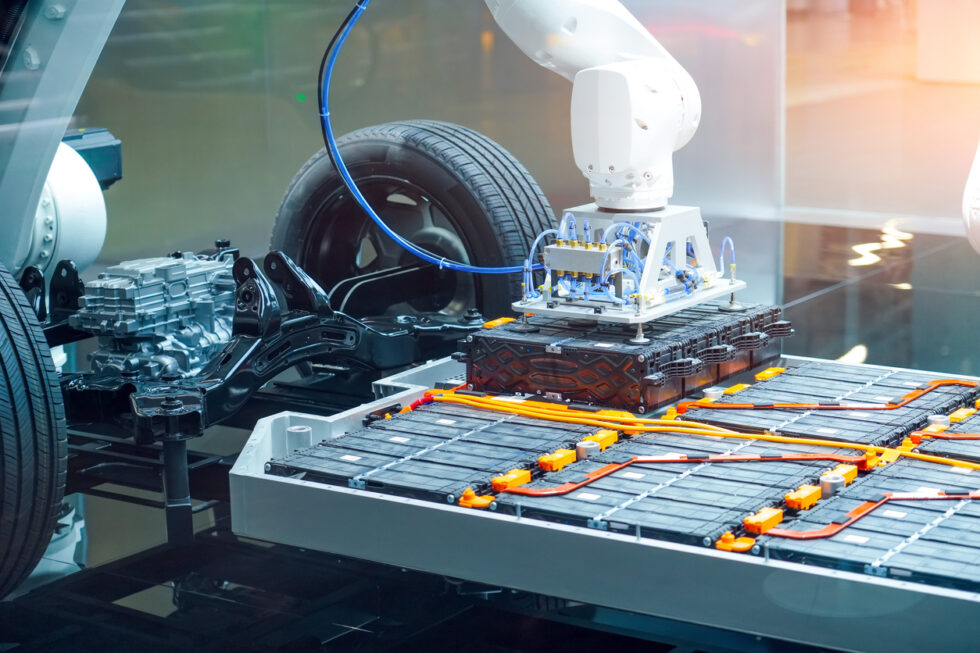
Procurement has faced a number of challenges in the transition to EV production. Here are a few of the major disruptions:
Slower-than-expected Adoption – And Then the Iran Crisis
The transition is proving less linear than many manufacturers originally anticipated. Slower-than-expected EV adoption in some markets, concerns over charging infrastructure, affordability pressures, and changing consumer preferences have prompted several automotive firms to reassess electrification timelines, hybrid strategies, and investment pacing. Stellantis, for example, has spoken of following “demand, not command” as it adjusts production and investment decisions in response to market conditions. On February 6, its CEO announced a reset, reflecting “the cost of over-estimating the pace of the energy transition that distanced us from many car buyers’ real-world needs, means and desires.”
Of course, that statement was made before the start of the 2026 Iran war, which may accelerate the switch to EVs following the surge in oil prices and growing concerns over energy security. The signs are already clear in Europe, where dealers in several countries reported significantly increased demand for new and used EVs.
This uncertainty creates major operational challenges for procurement and supply chain leaders.
Supply Chain Volatility
Automotive manufacturers can no longer rely on static sourcing models or long-range assumptions that remain unchanged for years at a time. Instead, procurement and supply chain leaders must adapt to rapidly shifting market conditions, regulatory changes, and evolving consumer demand.
This requires much closer collaboration between procurement, demand planning, manufacturing, finance, engineering, and supplier quality functions. In many organizations, procurement teams are becoming central coordinators within a broader order-to-delivery (O2D) environment, helping to align sourcing decisions with production forecasts, inventory strategy, supplier capacity, and commercial priorities.
Technology integration is critically important as part of this progress. Tight integration between source-to-pay (S2P) platforms and core enterprise systems such as ERP, manufacturing execution, logistics, and demand-planning platforms enables faster decision-making and improved visibility across the supply chain. Rather than operating in isolated functional silos, manufacturers increasingly require near real-time insight into supplier performance, inventory positions, production schedules, shipment status, and demand fluctuations.
Supplier intelligence is also becoming a strategic capability rather than simply a procurement support tool. Automotive firms are investing more heavily in continuous monitoring of supplier financial stability, geopolitical exposure, production capacity, ESG compliance, cybersecurity posture, and operational performance indicators such as PPM rates, SCAR frequency, and delivery reliability. Greater Tier-N visibility is particularly important in EV-related supply chains, where dependencies on sub-tier suppliers and raw material processors may create hidden vulnerabilities.
More flexible multi-round sourcing optimization, scenario modelling, and AI-supported analytics allow procurement teams to evaluate trade-offs between cost, resilience, localization, lead times, and geopolitical risk more dynamically than was possible in the past. Rather than selecting suppliers solely on lowest unit cost, automotive OEMs are increasingly assessing long-term supply assurance, regional diversification, and operational flexibility.
Closer supplier collaboration is necessary to build resilience. Enhanced use of tools such as vendor-managed inventory (VMI), advance shipping notices (ASN), shared forecasting, and collaborative planning processes can improve responsiveness and reduce line-down risk during periods of market volatility or supply disruption.
Ultimately, the goal is not to eliminate uncertainty, which is an impossible task in the current environment, but to create supply chains that are sufficiently visible, connected, and flexible to adapt as conditions change.
Is Your Automotive Supply Chain Ready for the Next Disruption?
Discover 7 strategies automotive procurement leaders can use to improve supplier resilience, strengthen visibility, and reduce exposure to global supply chain disruption.
Critical Minerals Sourcing
China now occupies a dominant position across large parts of the global EV supply chain, including battery cell manufacturing, rare earth processing, graphite refining, cathode and anode production, and battery precursor materials. This concentration has created growing strategic concern among automotive manufacturers in Europe and North America, particularly as electrification increases dependence on technologies and materials in which China holds a major competitive advantage.
For procurement and supply chain leaders, the implications extend far beyond simple sourcing risk. Automotive OEMs now face exposure to geopolitical tensions, export restrictions, trade disputes, shipping disruption, and price volatility across critical materials such as lithium, cobalt, nickel, manganese, and graphite. At the same time, achieving full Tier-N visibility remains extremely difficult, particularly where raw material extraction, refining, and component production span multiple jurisdictions and suppliers.
The challenge is not solely one of supply concentration. China has also established a significant lead in battery manufacturing scale, process maturity, and industrial integration. German automotive expert Ferdinand Dudenhöffer recently warned that Europe may lag China by as much as two decades in battery technology and production capability, underlining the scale of the competitive challenge now facing European manufacturers.
This technological gap has major procurement implications. Long-term battery sourcing agreements are becoming increasingly strategic, while competition for capacity among OEMs continues to intensify. Automotive manufacturers are also under growing pressure to secure access not only to finished battery cells, but to upstream processing and refining capacity as governments increasingly view battery supply chains as matters of industrial and economic security.
The situation is further complicated by ESG and regulatory pressures. Mining practices, labor conditions, carbon intensity, and traceability requirements are receiving far greater scrutiny from regulators, investors, and consumers alike. Procurement teams must therefore balance resilience, sustainability, cost competitiveness, and supply assurance simultaneously, often across highly fragmented and opaque international supply networks.
Manufacturers are responding in several ways. Nearshoring and “friend-shoring” initiatives are accelerating across Europe and North America, supported by government incentives and industrial policy measures aimed at strengthening domestic battery ecosystems. Large-scale battery gigafactory investments, strategic partnerships with battery producers, and recycling and circular-economy initiatives are all becoming increasingly important components of long-term sourcing strategy.
Semiconductors & Electronics Sourcing
Today’s vehicles are software-defined to an extent nobody could have imagined a couple of decades ago, with advanced driver assistance systems, connectivity features, battery management systems, infotainment platforms, and vehicle-control software all driving growing demand for semiconductors and electronic components. As the transition to EVs accelerates, this dependency will deepen further.
Although the acute chip shortages that disrupted automotive production during and after the pandemic have eased, procurement and supply chain leaders remain highly conscious of the sector’s continued vulnerability. Competition with consumer electronics manufacturers for semiconductor capacity remains intense, while many automotive-grade chips still involve long lead times and limited supplier concentration.
Recent geopolitical and regional disruptions have also highlighted the fragility of the wider semiconductor ecosystem itself. Constraints affecting strategically important inputs — including helium, which is essential for parts of semiconductor manufacturing — have demonstrated how seemingly indirect supply shocks can rapidly affect automotive production and sourcing strategies.
During periods of constrained capacity, automotive firms risk losing allocation priority to larger-volume technology customers.
Nearshoring vs Global Sourcing
The automotive industry has long depended on highly synchronized global supply networks operating with minimal tolerance for disruption. Components routinely cross multiple borders before final vehicle assembly, while tightly sequenced manufacturing environments leave little room for delay. In this context, even localized geopolitical events can rapidly escalate into global operational problems capable of halting production lines within days or even hours.
In recent years, automotive manufacturers have faced mounting pressure from a combination of Red Sea shipping disruption, US–China trade tensions, sanctions regimes, semiconductor export controls, war-related energy volatility, tariffs on Chinese EVs, and growing political pressure for nearshoring, reshoring or regionalization of critical supply chains. Collectively, these developments are reshaping long-established assumptions about global sourcing and industrial interdependence.
For procurement and supply chain leaders, the consequences are immediate and operationally significant. Logistics costs have risen sharply on some trade routes, lead times have become more volatile, and traditional just-in-time inventory strategies are increasingly being reassessed. Automotive OEMs and Tier 1 suppliers are under growing pressure to diversify supplier networks, reduce overdependence on single regions or suppliers, and improve continuity planning for strategically critical components.
The risks extend beyond physical disruption alone. Sanctions, export controls, regulatory divergence, and shifting trade policies can quickly alter the commercial viability of sourcing arrangements that previously appeared stable. In sectors such as semiconductors, batteries, and power electronics, procurement decisions are now influenced as much by geopolitics and industrial policy as by cost and operational efficiency.
Regulatory and ESG Scrutiny in EV Supply Chains
Sustainability, which was once treated primarily as a corporate social responsibility issue, has become an operational and commercial requirement affecting sourcing decisions, supplier qualification, market access, and investor confidence.
In Europe particularly, automotive manufacturers must work within a rapidly evolving regulatory environment. Requirements linked to EU emissions targets, Battery Passport initiatives, carbon reporting obligations, sustainability disclosure frameworks, and supply-chain due diligence legislation such as the European Union Corporate Sustainability Due Diligence Directive (CSDDD) have increased the compliance burden across the sector.
For procurement and supply chain leaders, the implications are extensive. Organizations must now track supplier emissions data, validate ethical sourcing practices, monitor labor and environmental standards, and maintain far greater visibility across multi-tier supply networks. In connected vehicle ecosystems, cybersecurity and software supply-chain assurance are also vital compliance considerations.
The challenge isn’t simply collecting ESG and compliance data but integrating it into operational procurement processes in a way that supports real-time decision-making. Historically, many organizations treated sustainability reporting as a separate downstream activity managed outside core procurement workflows. Today, automotive manufacturers are seeking to embed ESG, risk, and compliance data directly within source-to-pay processes so that supplier qualification, sourcing, contracting, purchasing, and supplier management activities all operate against a shared compliance framework. JAGGAER One streamlines data aggregation by providing seamless integrations with a wide range of third-party data providers. By centralizing all contextually relevant information, it ensures this data is instantly accessible across all operational processes and workflows.
This integration is vital because procurement decisions involve trade-offs between cost, resilience, localization, innovation, and sustainability objectives. A supplier may offer strong pricing but present elevated ESG risk, insufficient traceability, or exposure to jurisdictions subject to heightened regulatory scrutiny. Without integrated visibility, such risks can remain hidden until they become operational, financial, or reputational problems.
JAGGAER AI
AI That Moves Automotive Procurement Forward
JAI helps teams spot opportunities, manage risk, and make faster sourcing decisions.
Volatile Consumer Demand and Market Uncertainty
Consumer demand patterns in the automotive sector have become difficult to predict. While long-term electrification trends remain broadly intact, the pace and direction of market adoption can shift rapidly in response to economic conditions, energy prices, government incentives, charging infrastructure availability, and consumer sentiment.
Manufacturers are simultaneously facing uncertainty around EV adoption rates, affordability pressures, interest rate impacts, residual-value concerns, and changing attitudes towards vehicle ownership itself. In some markets, consumers remain hesitant about charging infrastructure and battery longevity, while in others rising fuel prices and environmental regulation are accelerating interest in EVs more quickly than expected.
This volatility creates major operational challenges for automotive procurement and supply chain leaders. Forecasting instability makes it harder to plan sourcing volumes, supplier capacity, inventory levels, and manufacturing schedules with confidence. OEMs risk overcommitting to one technology path too early while simultaneously facing the danger of insufficient supply if demand shifts unexpectedly.
The consequences can be significant: underutilized manufacturing capacity, excess inventory exposure, supplier instability, production bottlenecks, and delayed sourcing decisions.
These risks are particularly acute during the ongoing ICE-to-EV transition, where manufacturers may need to support parallel supply chains for internal combustion, hybrid, and fully electric platforms simultaneously.
As a result, automotive procurement organizations are placing greater emphasis on predictive analytics, scenario modelling, and AI-supported forecasting capabilities. Rather than relying solely on historical purchasing patterns or static annual forecasts, manufacturers need near real-time visibility into changing market conditions and customer behavior.
In practice, these capabilities usually depend on integration across multiple enterprise systems rather than existing purely within standalone source-to-pay (S2P) platforms. S2P technology increasingly provides the operational framework for sourcing, supplier management, spend visibility, and procurement orchestration, but predictive demand forecasting typically relies on integrated data feeds from: ERP systems, sales and marketing platforms, dealer and order-management systems, production planning tools, logistics platforms, external market intelligence, and increasingly telematics and connected-vehicle data.
See AI-Powered Procurement for Automotive in Action
See how JAGGAER can help your automotive procurement team improve supplier visibility, manage sourcing complexity, and respond faster to disruption.
We will conclude this three-part series by considering the role of AI in the EV automotive sector (part 3).
The EV Supply Chain Reset: How Automotive Procurement Must Adapt (a three-part series)
- Part 1: Why Procurement Is Central to the EV Era
- Part 2: Procurement Challenges in the EV Automotive Industry
- Part 3: The Role of AI in Automotive Supplier Risk Management
Talk to a procurement expert.
Tell us your challenge. We will show you exactly where JAGGAER One fits into your current setup — with specifics, not a generic demo.
- Direct or indirect?
We handle both — on one platform. - Already have an ERP?
JAGGAER Link connects to 1,000+ systems, no rip-and-replace. - Need to show ROI fast?
We define outcomes and KPIs before you sign. - Vertical-specific?
Manufacturing, higher ed, public sector — configured, not customized.
Request a Demo
Related Articles

Blog
The EV Supply Chain Reset, Part 3: The Role of AI in Automotive Supplier Risk Management

Blog
The EV Supply Chain Reset, Part 1: Why Procurement Is Central to the EV Era

Blog
Basware Alternatives in 2026: How to Compare Them and Which Fits Your Procurement
Blog



