
Steel, Aluminum & Rare Earth Volatility: A Mid-2026 Reality Check for Procurement Teams
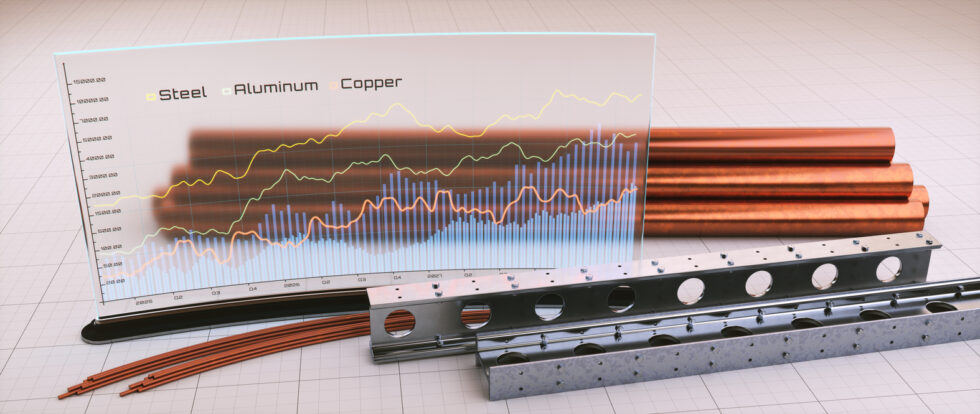
Steel, aluminum, and rare earths are facing three different forms of cost volatility in 2026. Steel and aluminum tariffs now reach 50%, while NdPr prices have risen 138% year to date. Steel faces higher U.S. tariffs and broader customs-value exposure. Aluminum has split into a global LME benchmark and a much higher U.S. physical-market cost. Rare earths face sharper volatility driven by concentrated supply and export licensing. That’s what commodity procurement looks like in 2026: managing cost, availability, and supply risk across three materials that no longer move together.
This article is a 2026 commodity procurement risk data snapshot. It presents the latest steel, aluminum, and rare-earth price and policy data, explains the forces behind the changes, where costs are moving, and translates them into practical procurement actions.
2026 Commodity Snapshot
50%
Section 232 tariff on wholly steel/aluminum imports (2026)
$2,182/t
Record US aluminum Midwest premium, early 2026
+138%
NdPr rare earth alloy price, YTD through April 2026
Steel: What’s Actually Changed in 2026
The U.S. steel regime became materially more restrictive in 2026, with tariffs reaching 50% and the calculation base expanding to full customs value.
- The tariffs on steel imports increased from 25% to 50% under Section 232 and came into effect on June 4, 2025.
- The bigger change arrived on April 6, 2026, when Section 232 duties began applying to the full customs value, rather than only the steel content. Core steel articles remained subject to a 50% tariff, while steel derivatives moved to a 25% full-value tariff.
- President Trump issued a proclamation on 1st June 2026. The proclamation established the temporary tariff framework which will be effective from June 8, 2026, through December 31, 2027.
The cost pressure is already visible. The producer price indexes for steel mill products increased by 20.7% from January 2025 to January 2026. It was the largest year-over-year increase since the supply-chain disruptions of early 2022.
For procurement teams, steel and aluminum price volatility in 2026 makes regional exposure increasingly important. Steel exposure now depends on both the product classification and the customs value, not simply the embedded metal value. So, commodity strategy for procurement built before April 2026 needs a full re-check. Also, contracts and sourcing budgets can now be planned against a known deadline of December 31, 2027, rather than an open-ended tariff.
JAGGAER One: Commodity Risk Modeling
JAGGAER One enables commodity volatility and risk modeling, which feeds sourcing decisions for critical minerals across manufacturing.
Aluminum: The Two-Tier Market
There is no longer a single aluminum price in 2026. US buyers now pay roughly 70% more than the rest of the world for the same tonne of metal. There are three numbers required to understand the market dynamics.
- Global LME Benchmark: The LME benchmark is expected to average USD 3,400–3,800 per tonne as per major institutional forecasts for 2026.
- US Midwest Premium: Buyers from the United States pay a surcharge on top of the LME price for physical aluminum delivery inside the United States. The US Midwest premium hit a record of about $2,182 per tonne in early 2026. It crossed the $1 per pound mark for the first time.
- Real Cost to US Buyers: The rise in US Midwest premiums has increased the US “all-in” price to above USD 5,340 per tonne. US-based casters now pay 70% more than international competitors sourcing on the LME alone.
The cost impact is already visible downstream. The U.S. aluminum mill-shape prices rose 33% year-over-year in January 2026, and S&P Global reported U.S. aluminum imports fell 25% year-over-year in 2025.
The procurement implication is that aluminum should no longer be managed as a single global commodity price. The buyer’s actual cost now depends heavily on region, tariff exposure, and the premium. Recycled content is one lever inside that cost stack buyers can actually pull. See how CBAM adds to the aluminum cost picture for why a higher recycled share is now a financial decision, not just a sustainability one.
Rare Earths: A Different Kind of Volatile
Rare-earth volatility is structurally different from steel and aluminum. Its supply depends on concentrated processing capacity and export licenses instead of tariff rates.
NdPr prices show just how quickly things have shifted. NdPr alloy prices rose from $53/kg in January 2026 to around $126/kg by April 2026, representing a 138% year-to-date gain. Dysprosium also moved in the same direction. The price rose to $220.93/kg in April 2026, marking a 15.6% month-on-month increase.
The underlying vulnerability is concentration. No commercial-scale terbium production exists outside China, so buyers have no alternate source to shift toward if supply tightens further. Lynas produced its first terbium oxide in Malaysia in June 2025, marking a diversification milestone. So, western alternatives are emerging, but capacity remains limited.
For procurement, this changes the risk equation. A tariff can be repriced or removed, but qualifying alternative rare-earth supply requires new processing capacity, licenses, and years of investment. The concentration risk is exactly why the procurement-platform angle on this matters most in sectors like automotive, where rare-earth dependency runs deepest.
Expand Supplier Access and Collaboration
JAGGAER has a network of 13 million suppliers enabling collaborative supplier relationships and covering core spend categories such as raw materials, ingredients and components.
Temporary Noise or Structural Shift?
The answer depends on the commodity. Steel and aluminum face a policy-driven cost shock while rare earths face a structural supply risk that procurement cannot solve through tariff forecasting alone.
Steel and aluminum tariffs are a policy choice. The current 50%/25% structure is locked in only through December 31, 2027. That’s a fixed date set by proclamation, and a future proclamation can extend, reduce, or end it. The mechanism is political, which means it’s reversible or extendable. Rare earth volatility works differently. It is driven by mine concentration and export licensing.
Two Kinds of Volatility
Steel & Aluminum vs. Rare Earths
Tariff-Driven Volatility
Commodities: Steel, Aluminum
Driver: Policy: Section 232 tariffs
Outlook: Stated end date (Dec 31, 2027); could reverse or extend
Concentration-Driven Volatility
Commodities: Rare Earths (NdPr, Dysprosium, Terbium)
Driver: Concentrated supply and export licensing
Outlook: No near-term Western alternative; no policy off-switch
Steel and aluminum volatility can be repriced by proclamation. Rare earth volatility resolves only with new processing capacity.
This distinction should drive two different procurement responses to steel and aluminum price volatility in procurement, particularly through 2026. Steel and aluminum call for contract terms that price in tariff risk through 2027. Rare earths call for supplier diversification and buffer stock, because there’s no specific date when concentration resolves itself.
Treating all three commodities with one mitigation plan misses this. Thus, commodity strategy for procurement should treat the commodities differently: model policy scenarios for steel and aluminum but build supply resilience around rare earths. These are the kind of scenarios covered by JAGGAER’s tariff and geopolitical risk modeling.
Frequently Asked Questions
U.S. steel and aluminum tariffs increased in 2026 to strengthen domestic industry protection, with Section 232 duties expanded to cover full customs value for covered imports. This policy shift shows up instantly in commodity procurement risk data.
The Midwest premium is the surcharge American buyers pay on top of the LME price for physical aluminum delivery inside the US. It is a critical measure of the delivered metal cost for U.S. buyers. It hit a record $2,182/tonne in early 2026, crossing $1 per pound for the first time in history.
Steel and aluminum tariffs are currently policy measures rather than permanent rates. The June 1, 2026, proclamation locked the current tariff structure in place through December 31, 2027, giving procurement its first fixed deadline under this regime.
Rare earth prices surge faster than steel or aluminum due to China’s supply monopolies, extreme chemical refining complexities, and soaring demand from green technologies like electric vehicles.
Rare earth price volatility is unlikely to ease. It may ease if export licenses normalize, but concentrated processing capacity and continuing trade restrictions leave significant supply risk through 2026.
CBAM makes embedded carbon emissions a sourcing cost. So, EU aluminum buyers must consider emissions intensity, verified supplier data, and carbon-price exposure alongside metal prices.
No. Tariff risk is a policy rate with a known 2027 deadline, and a future proclamation can extend, reduce, or end it. Rare-earth exposure requires supply diversification, qualification planning, and dependency mapping. Tariff risk and rare-earth risk sit on two different types of commodity procurement risk data.
Procurement teams should manage steel and aluminum price volatility in 2026 by modelling tariff scenarios and tracking regional premiums. They should also build diversified and qualified supply for rare earths with longer-term resilience planning.
Next Steps
Steel, aluminum, and rare earth volatility hit hardest where all three commodities converge: automotive manufacturing. See the procurement-platform angle on this in the deeper look at critical mineral risk across auto supply chains.
Aluminum’s cost picture doesn’t end at the tariff. See how CBAM adds to the aluminum cost picture, and why recycled content is now a financial lever and not just a sustainability one.
See the full walkthrough of how discrete manufacturing ties this with contract risk management, S2P automation, and supplier compliance for manufacturing procurement teams.
JAGGAER One’s Manufacturing Procurement Solutions
JAGGAER One is an AI-enhanced Source-to-Pay platform which streamlines procurement, improves supplier relationships and helps manufacturers navigate through global supply chain complexities.
Disclaimer
Note that all prices and tariff rates reflect a specific point in time and are sourced from third-party market reporting and government proclamations; readers should verify current rates before making sourcing or budgeting decisions.
Talk to a procurement expert.
Tell us your challenge. We will show you exactly where JAGGAER One fits into your current setup — with specifics, not a generic demo.
- Direct or indirect?
We handle both — on one platform. - Already have an ERP?
JAGGAER Link connects to 1,000+ systems, no rip-and-replace. - Need to show ROI fast?
We define outcomes and KPIs before you sign. - Vertical-specific?
Manufacturing, higher ed, public sector — configured, not customized.
Request a Demo
Related Articles

Blog
The EV Supply Chain Reset, Part 3: The Role of AI in Automotive Supplier Risk Management

Blog
The EV Supply Chain Reset, Part 2: Procurement Challenges in the EV Automotive Industry

Blog
The EV Supply Chain Reset, Part 1: Why Procurement Is Central to the EV Era

Blog



