
Procurement Software
Procurement software.
Requisition to PO, connected.
Guided buying, catalog compliance, and touchless PO processing.
70%
increase in on-
contract spend
60%
reduction in PO
processing time
18%
reduction in
maverick spend
25%
total cost
savings
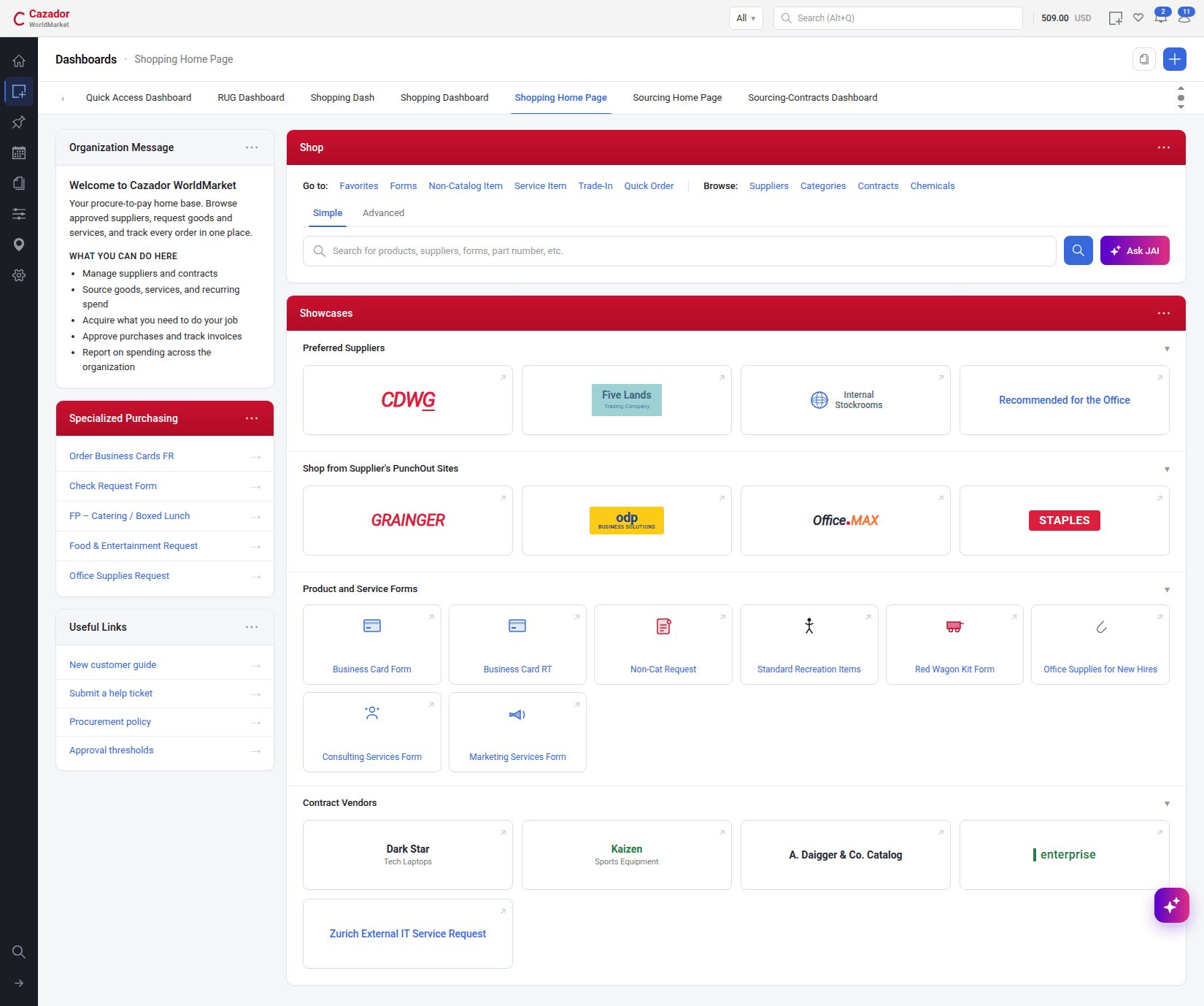
Guided buying that keeps every purchase on contract.
Every request type captured. Every exception visible. No manual handoffs.
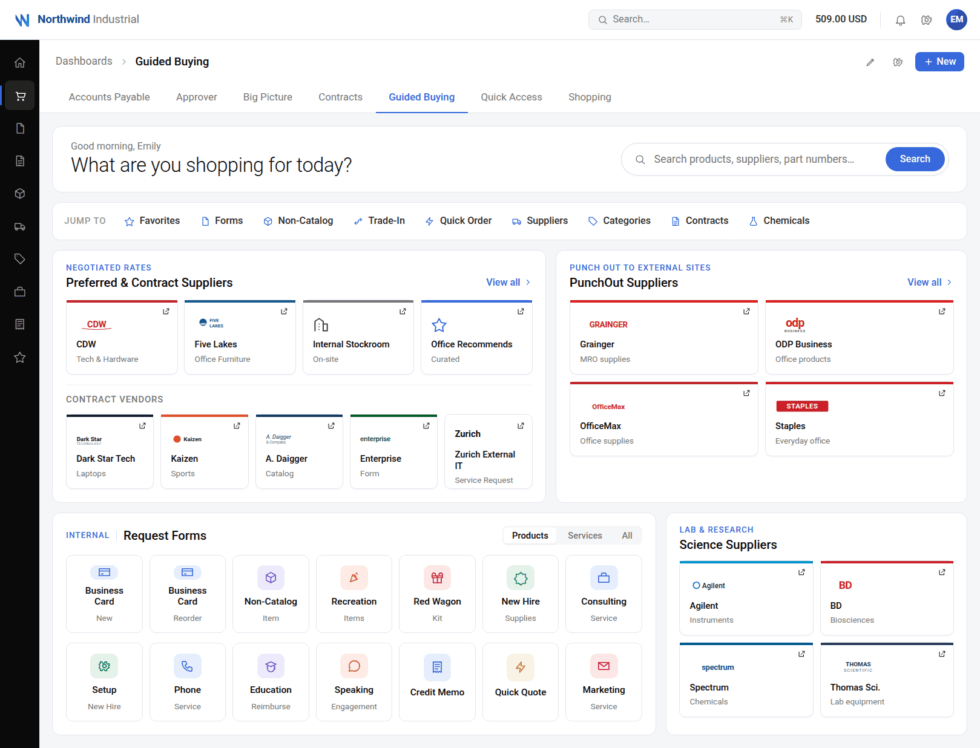
Guided buying & catalog management
Contracted suppliers enforced at search. Non-catalog requests routed through configurable intake workflows.
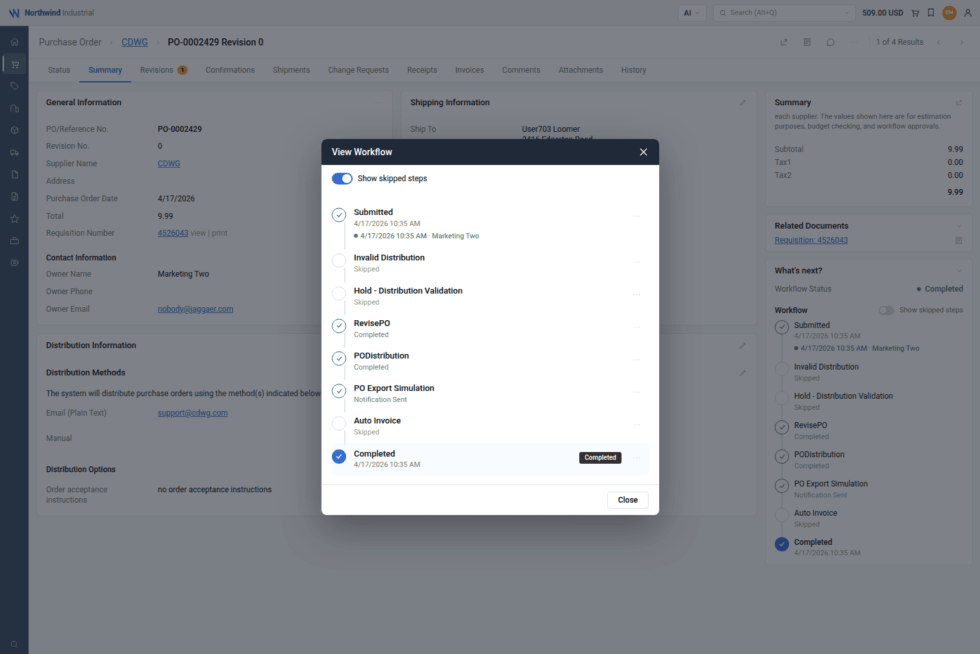
Configurable approval workflows
Approval routing by value, commodity, BU, and cost center with auto-escalation.
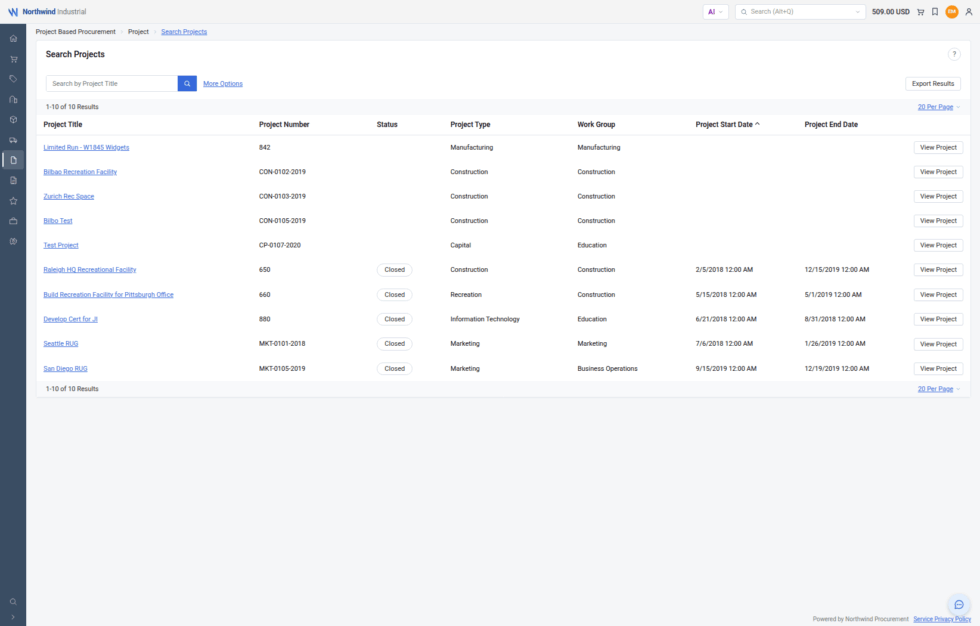
Budget management & project-based procurement
Budget committed at requisition to control spend before PO creation. Supports project and CapEx tracking.
Inventory management & order management
Inventory-aware purchasing helps prevent unnecessary orders and stockouts.
On-contract spend & price compliance enforcement
Negotiated pricing applied in-cart. Off-contract exceptions flagged and tracked.
Supplier network enablement & catalog integration
Suppliers manage catalogs, acknowledge POs, send ASNs, and flip POs to invoices via portal.
Click image to enlarge
Click image to enlarge
Click image to enlarge
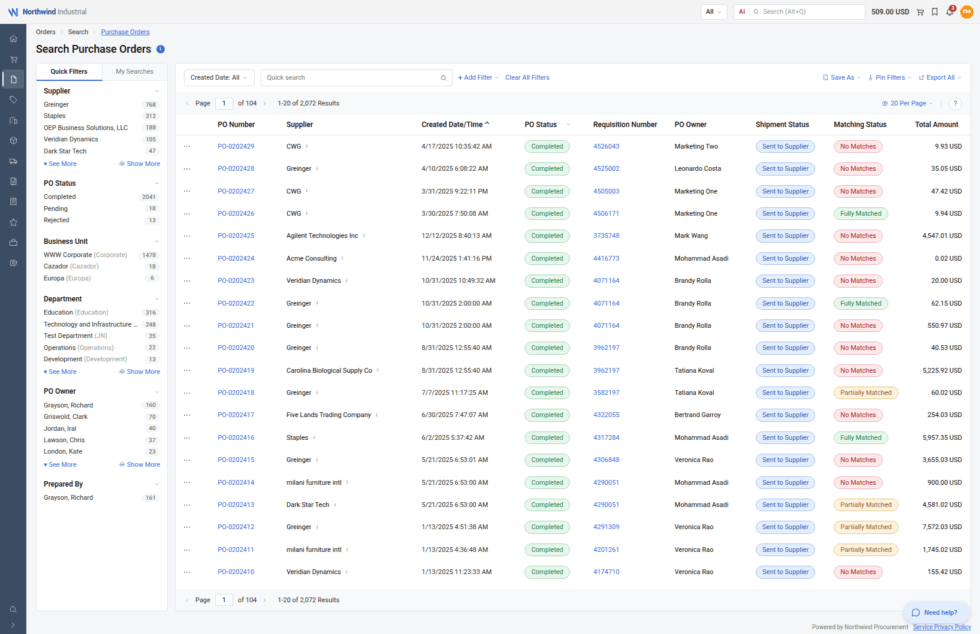
Click image to enlarge
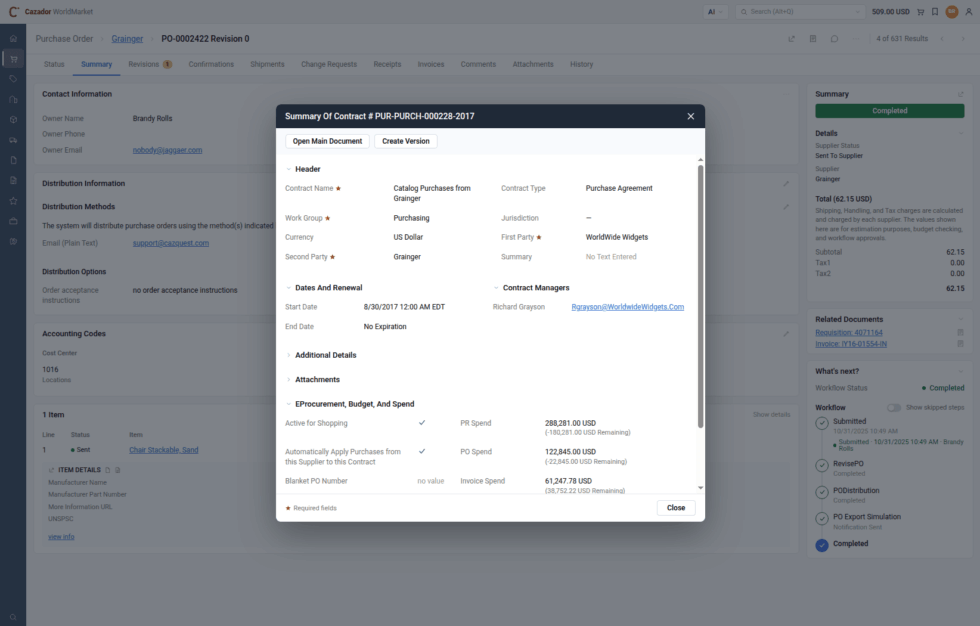
Click image to enlarge
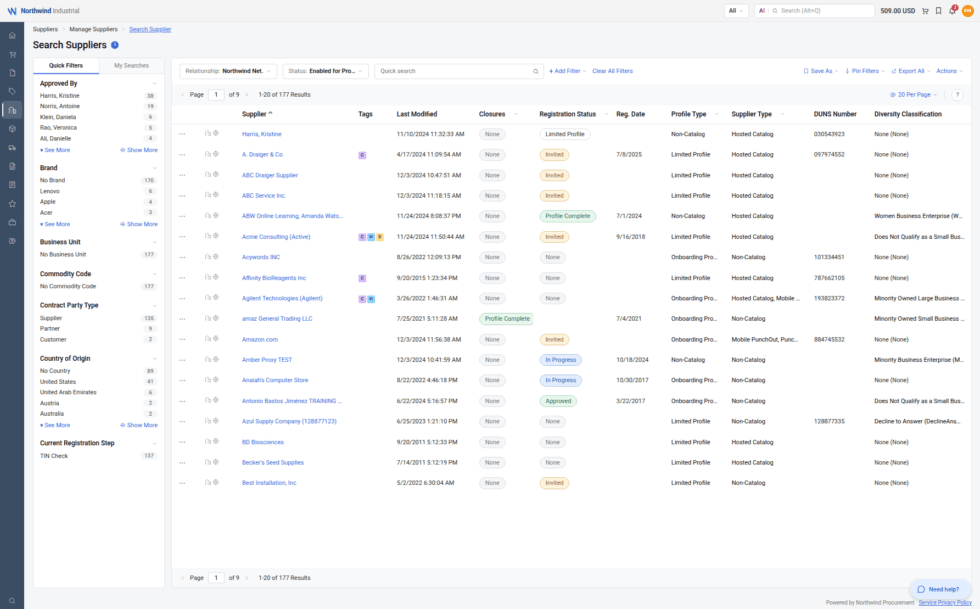
Click image to enlarge
Guided buying & catalog management
Configurable approval workflows
Budget management & project-based procurement
Inventory management & order management
On-contract spend & price compliance enforcement
Supplier network enablement & catalog integration
AI embedded in your procurement software workflows.
Fewer errors. Faster approvals. Less manual review.
Approval recommendations
PR confidence scored from historical PO data. Customizable thresholds for recommendations.
Commodity code matching
Commodity and account code recommendations at line level before the requisition is submitted.
PR risk flagging
Identifies high- and low-risk line items and anomalies highlighting where to focus review.
Your S2P expert is here.
AI grounded in your policies.
Fluent in your data.
JAI cuts maverick spend, accelerates cycles, and shrinks support load
Procurement solutions built for your industry.
Manufacturing, higher education, public sector, and more. Configured to your compliance rules and buying policies.
Manufacturing
MRO compliance · PO call-offs · Budget control
What procurement software enforces
- MRO and catalog compliance at plant level
- Blanket PO call-offs aligned to production
- Budget visibility at requisition by cost center
- Approval thresholds by commodity and value
- ERP write-back to SAP, Oracle, Infor
Higher education
Guided buying, Spend visibility, Policy adherence
What procurement software enforces
- Department-level catalog and punchout buying
- Grant compliance enforced at requisition
- Sole-source justification workflows for research
- Guided buying for non-procurement users
- Integration with Banner, Workday, Oracle
Public sector
Competitive bidding · Audit trails · Budget control
What procurement software enforces
- Competitive bid thresholds
- Structured intake for sub-threshold purchases
- Budget committed at requisition for audit control
- Full audit trail across all decision points
- Guided buying across departments
One AI procurement platform. Source to pay.
Every purchase tied to a contract, budget, and approved supplier.

“Not only can we place orders with suppliers more quickly and process payments electronically. We also have much greater visibility.“
― Denice Ferguson, Business Systems Analyst, UNC Charlotte
What customers achieve with procurement software.
On-contract spend, faster POs, less maverick buying.
- More than 60% of purchases are purchase order-compliant
- Increased perception of procurement as mission-critical business function
“We have captured many benefits thanks to the decision we took to extend our JAGGAER implementation to include sourcing, transparency, accountability, speed of response and great efficiency with a lean team of 10 people.”
- $300K in soft cost savings annually
- $15.5M in internal supplier revenue processed in one year
“Thanks to JAGGAER, it's one-stop shopping. Whether it's an internal or external supplier, it's the same seamless process.”
- 7,000 catalog items from approximately 850 suppliers
- 2,500+ free‑form (non‑catalog) purchase orders annually
“A system that will be used by many people needs to be simple, transparent and intuitive. eProcurement checks all of the boxes.”
The procurement platform recognized by industry leaders.
Analysts name JAGGAER across AI, S2P, CLM and P2P.
Magic Quadrant
- 2026VisionaryS2P Magic Quadrant
- 2025VisionaryS2P Magic Quadrant
- 2024VisionaryS2P Magic Quadrant
IDC Rankings
- 2026LeaderAI-Enabled Direct Spend
- 2025LeaderCLM & P2P
- 2025LeaderAI-Enabled Buy-Side CLM within S2P
- 2025LeaderAI-Enabled P2P Application
Technology Advisor
- 2026Market LeaderAutomation & Payments
- 2024Vanguard LeaderStrategic Sourcing
- 2023Vanguard LeaderePayables
Connects to SAP, Oracle, Workday, and your full tech stack.
40+ pre-built integrations across ERP and enterprise systems.
SAP
Oracle
Workday
Sage
NetSuite
Ellucian
PeopleSoft
Infor
JD Edwards
… and 30 more.
Procurement resources & insights.
Guides, blogs and reports from the JAGGAER team.
Frequently asked questions about procurement software.
Procurement software is technology that helps organizations manage and automate procurement activities across the purchasing lifecycle. Depending on the platform, procurement software can support spend analysis, sourcing, supplier management, contract management, purchasing, invoicing, analytics, and other Source-to-Pay processes within a connected system.
Procurement software helps organizations manage how goods and services are sourced, purchased, contracted, and tracked. It can centralize procurement data, automate workflows, improve supplier visibility, standardize purchasing processes, and provide procurement teams with greater insight into spending, contracts, suppliers, and performance.
Key procurement software features can include spend analytics, strategic sourcing, supplier discovery and onboarding, supplier performance management, contract management, requisitions, approvals, purchasing, catalog management, purchase orders, invoice processing, reporting, and integrations with ERP and financial systems. The right capabilities depend on an organization’s procurement maturity and business requirements.
Procurement software can help organizations improve spend visibility, reduce manual processes, strengthen procurement controls, increase supplier transparency, accelerate sourcing and purchasing cycles, and identify savings opportunities. It can also provide more consistent procurement processes across departments, business units, and geographic regions.
Procurement software can help reduce costs by identifying sourcing opportunities, improving contract utilization, increasing spend under management, consolidating suppliers, reducing off-contract purchases, and providing greater visibility into pricing and purchasing behavior. Better procurement data also helps teams identify categories where additional negotiations or sourcing activity may deliver savings.
Procurement software brings together information from suppliers, contracts, sourcing events, purchases, invoices, and other procurement activities. This gives procurement teams a more complete view of organizational spend and can help them understand what is being purchased, from which suppliers, under which contracts, and across which categories or business units.
Procurement software can help sourcing teams manage supplier identification, requests for information, RFQs, RFPs, auctions, bid analysis, evaluations, negotiations, and award decisions. Centralizing sourcing activity can make events easier to manage while providing better visibility into supplier responses, pricing, and sourcing outcomes.
Purchasing software typically focuses on transactional buying activities such as requisitions, approvals, purchase orders, and receiving. Procurement software is broader and can include strategic activities such as spend analysis, sourcing, supplier management, contract management, purchasing, and performance analytics across the procurement lifecycle.
Procurement software can be used by procurement, sourcing, supply chain, finance, accounts payable, legal, and business teams. Employees may also interact with procurement software when requesting goods or services, selecting suppliers, approving purchases, reviewing contracts, or managing supplier relationships.
Procurement software can support procurement transformation by replacing fragmented systems and manual processes with more connected, automated workflows. A modern procurement platform can improve data visibility, streamline collaboration, strengthen governance, and give procurement teams the tools needed to move from transactional purchasing toward more strategic sourcing, supplier management, and spend optimization.
Procurement software can be used by procurement, sourcing, supply chain, finance, accounts payable, legal, and business teams. Employees may also interact with procurement software when requesting goods or services, selecting suppliers, approving purchases, reviewing contracts, or managing supplier relationships.
Yes. Enterprise procurement software is designed to support organizations with complex supplier networks, multiple business units, global operations, diverse approval structures, and large volumes of spend. A scalable procurement platform can help standardize processes while still supporting regional requirements, configurable workflows, ERP integrations, and centralized visibility across the organization.


